REVIEW · BOROBUDUR
Yogyakarta: Borobudur Temple Entry Ticket
Book on GetYourGuide →Operated by Globaltix Indonesia · Bookable on GetYourGuide
Borobudur makes time feel slow. This pre-booked entry ticket gets you into the world’s biggest Buddhist monument, where you can follow layered stone terraces and study the 2,672 relief panels that tell stories in a mix of Indonesian and Indian temple design.
What I love most is how much detail is packed into a visit that doesn’t require a full-day tour. You’ll also get those big, cinematic views toward the hills and the Menoreh Mountains while you walk the site.
One heads-up: the entry ticket does not include the ticket to climb to the very top, and getting the right kind of entry matters. If you’re mixing ticket types, it can turn into wasted time at the entrance—so double-check what you’re buying before you go.
In This Review
- Key things to know before you buy
- Your entry ticket gets you inside Borobudur’s real story
- The view and the carvings: what you’ll spend your time on
- Relief panels that reward walking at human speed
- The Buddha carvings and the feeling of a built “text”
- Menoreh Mountains backdrop: why the hilltop matters
- Green Park entrance: the practical flow (and the souvenir reality)
- Architecture mix: Sailendra meets Gupta influence
- Restoration in the 1970s: why you’re seeing this version
- Timing: make the hours work for you
- Price and value: entry for $3.08, plus what to budget
- What I’d do to make this ticket feel effortless
- Provider and language help: what to expect at the entrance
- Should you book the Borobudur entry ticket?
- FAQ
- What is the duration of the Borobudur entry ticket?
- What are Borobudur Temple opening hours?
- Where do I redeem my digital entry ticket?
- Does this ticket include climbing to the top?
- Is the activity refundable?
- What should I bring?
- What age groups are ticketed?
- Is the site wheelchair accessible?
- What languages are available for the host or greeter?
Key things to know before you buy
- 2,500 square meters of temple surface to explore, plus thousands of carvings
- Relief panels and Buddha scenes laid out across terraces for a guided-by-layout feel
- Sailendra era, AD 780–840 design with Indian Gupta influence and local Indonesian details
- Green Park entry on foot, where souvenir vendors exist but are regulated so they don’t swamp you
- Operating hours 06.30–16.30 WIB, with gates closing 30 minutes early
- Top climb requires an extra ticket even if you have entry
Your entry ticket gets you inside Borobudur’s real story
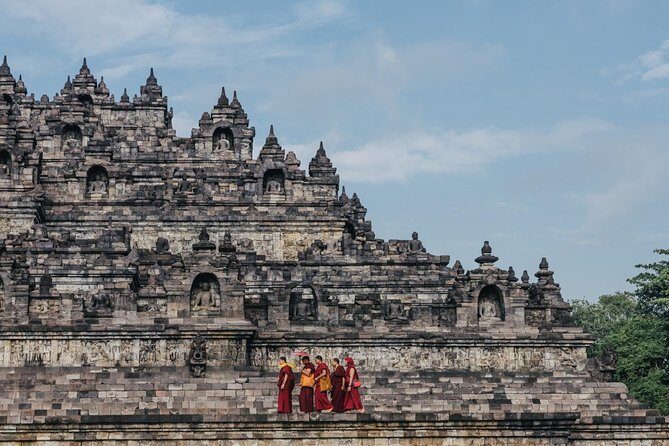
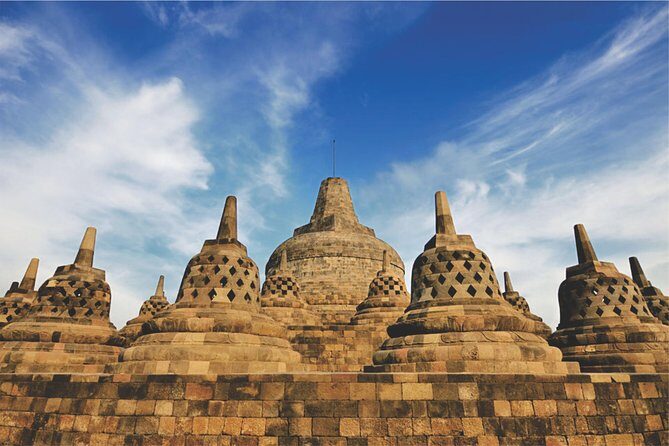
Borobudur sits on a hilltop outside Yogyakarta, looking down over green fields and distant ridgelines. The ticket you buy is the key that opens the front door to a monument that was built in the Sailendra dynasty era, around AD 780 to 840. That date matters because it explains why you see such careful planning: Borobudur isn’t a random pile of stones. It’s a structured, layered design made to be read as you walk.
The temple covers about 2,500 square meters in surface area, and the decoration is what makes it more than an architectural landmark. There are 2,672 relief panels carved into the monument, and the original plan included 504 Buddha statues (many of which aren’t as you’d expect today, but the design language still hits). If you like religious art, mythology, and symbolism, you’ll notice that the stories aren’t just decorative. They’re part of a larger philosophical message expressed through stone.
And yes, you’re also in Java. That means weather, light, and crowd flow can shift your experience fast. A well-timed entry helps you slow down and actually look at the carvings instead of rushing like you’re late for a train.
More tours from Yogyakarta at Borobudur & Central Java
The view and the carvings: what you’ll spend your time on
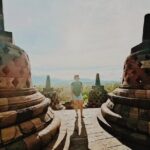
Most people come for Borobudur’s stonework, and this entry ticket delivers that in a very practical way. You can focus on two things at once: the carvings up close and the landscape lines out beyond the terraces.
Relief panels that reward walking at human speed
Borobudur’s reliefs are attached to the temple and built into the experience of moving around it. Expect stories with philosophical weight—legends and teachings shown in sequences. Even if you don’t speak fluent art history, the layout helps. You can pick a section, follow it along the wall, then turn to the next terrace when your eyes need a break.
My advice: don’t try to read everything. Instead, choose a handful of relief panels to really study. Look for recurring figures and scenes, then connect the dots. That’s usually where the monument clicks.
The Buddha carvings and the feeling of a built “text”
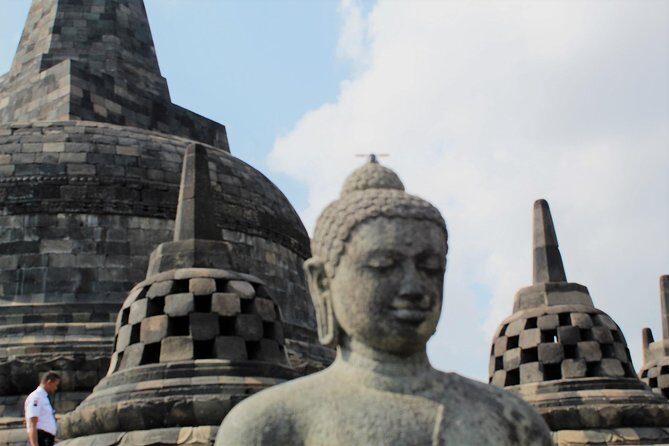
The Buddha imagery isn’t just one statue or one viewpoint. It’s part of the design rhythm. When the guide signs or descriptions are available, you’ll get context for why certain carvings are there and what they were meant to communicate.
If you’re expecting a single highlight photo, you may be disappointed at first. Borobudur works better when you treat it like a guided walk through layers—less like a museum hall, more like a stone narrative.
Menoreh Mountains backdrop: why the hilltop matters
One of Borobudur’s best tricks is how it blends art and atmosphere. You’ll be on a hilltop, and the Menoreh Mountains show up as a backdrop when you step out or shift viewpoints across terraces. This isn’t just scenery. It changes your perception of the carvings.
When you look at stone reliefs against bright Java daylight, you can see depth and weathering more clearly. When you glance toward distant hills, the whole monument feels like it belongs to its setting rather than being dropped into a landscape. You end up with that rare experience where the architecture and the outside world are in the same frame.
More Borobudur tickets & admissions at Borobudur & Central Java
Green Park entrance: the practical flow (and the souvenir reality)
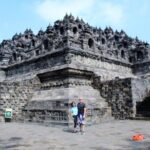
After you enter, you’ll be able to walk through Green Park from the entrance. This part matters for your comfort and timing. It’s your buffer space: a place to get bearings, adjust your pace, and decide how long you want to spend before you commit to deeper parts of the monument.
There will be vendors selling souvenirs and small items. The key detail: there are regulations meant to prevent them from disturbing visitors. Translation: you still have to be firm with your personal space and keep walking, but it’s not supposed to become chaotic.
My practical tip: keep a little patience for the early stretch, especially in peak hours. If you start rushing the moment you enter, you’ll miss what makes Borobudur special—its stone storytelling and the way terraces guide your attention.
Architecture mix: Sailendra meets Gupta influence
Borobudur was built under the Sailendra dynasty, and its temple design reflects Gupta architecture influence from India. That could sound like a lecture, but you can actually spot the blend once you know what to look for.
Look for a sense of order in the forms—temple geometry, layered terraces, and structured spaces for storytelling. Then look for the local adaptation. Borobudur isn’t a copy. Indigenous Indonesian scenes and elements are present alongside Indian architectural influence. That mix is part of why Borobudur feels both connected to a wider Buddhist world and distinctly Indonesian.
You’ll get the most out of this if you treat it like pattern recognition:
- Pick a motif you see in one section.
- Find a related motif in another terrace area.
- Notice whether the style stays consistent or shifts with the narrative.
Even without labels in your language, you can learn the monument’s logic through repeated visual patterns.
Restoration in the 1970s: why you’re seeing this version
A big reason Borobudur still feels intact is restoration. After centuries of neglect, the Indonesian Government and UNESCO worked together in the 1970s. Restoration took eight years, bringing the monument back toward its former majesty.
This matters for your expectations. Borobudur isn’t untouched ancient ruin in a fantasy sense. It’s preserved, stabilized, and maintained. That’s good news. You get to stand close enough to see the reliefs clearly without the site turning into a hazard.
It also helps explain why the carvings you see are meant to be legible and durable. You’re not just sightseeing—you’re walking through an artifact that was saved, then restored with care.
Timing: make the hours work for you
Borobudur’s operating hours are 06.30–16.30 WIB, but the gates close 30 minutes earlier than those hours. That one detail changes everything.
If you arrive late, you may still get inside, but you’ll feel rushed on the terraces. If you’re the type who likes to stop and really look, treat the early window as part of the attraction. Bright morning light can also help reliefs pop.
You also have only a 1-day validity for the ticket, so plan your day around your entry time. You don’t want Borobudur to be something you squeeze in after an exhausting day of transfers.
Price and value: entry for $3.08, plus what to budget
The published price is $3.08 per person, which is shockingly low for a UNESCO-scale monument experience. The value isn’t just the cost. It’s what that entry unlocks: access to a world-class temple complex with dense decoration—reliefs, Buddha carvings, and terraces spanning about 2,500 square meters.
But keep your budget honest. The ticket you buy for entry does not include the additional ticket to climb to the top. That means your total cost depends on what you want to do once you’re inside.
Here’s how to decide:
- If you want the art, the walking, and the big viewpoint experience from the main levels, the entry ticket alone may feel like enough.
- If you want the climb experience to the top, plan for extra expense and extra time so you’re not sprinting through the rest of the monument.
One more value consideration: you’re required to redeem your digital ticket at a kiosk near the entrance. If your ticket type is wrong or restricted, you can lose time right when you most need it. I’d rather pay a bit more and be sure than save money and spend your first hour sorting out ticket issues.
What I’d do to make this ticket feel effortless
If you want Borobudur to feel like a calm, meaningful visit (not a checklist), here’s a simple approach you can use:
1) Arrive with comfortable shoes and clothes. The ground and terraces are real walking.
2) Bring your ID or passport and keep it easy to reach at redemption.
3) Decide early whether you want the top climb so you don’t change plans mid-stream.
4) Focus on a few relief sections deeply, not all of them quickly.
5) Take breaks as you move between terraces. Reliefs are detailed; your eyes need pauses.
Also, consider that the temple is a place with rules and visitor flow. If you’re sensitive to crowds, pick a time that gives you breathing room. If you’re fine with energy and movement, you’ll still get what you came for as long as you respect the closing time.
Provider and language help: what to expect at the entrance
The activity is run by Globaltix Indonesia, and a host or greeter is listed as available in English and Indonesian. That’s helpful if you run into questions at redemption or need a quick check about your ticket.
Your digital entry ticket is redeemed directly at the kiosk near Borobudur’s entrance. This is not a “meet in a lobby and get transported” kind of setup. You’re doing an on-site redemption, so your job is to show up with the right documents and a clear plan.
Should you book the Borobudur entry ticket?
Book it if you want an easy, low-cost way into one of the world’s most important Buddhist monuments, and you’re happy to explore mainly from the entry levels without rushing to the very top.
Skip or think twice if:
- You specifically want the top climb and don’t want to manage extra ticket costs.
- You’re worried about ticket eligibility details. I’ve seen situations where people ended up with tickets that didn’t match what they needed, and that turns the day sour fast.
- You arrive late. Gates close 30 minutes before the operating hours end, and Borobudur punishes rushed visits.
If you like walking for meaning, studying stone carvings, and using the hilltop setting to frame what you’re seeing, this is a great ticket to have in your pocket.
FAQ
What is the duration of the Borobudur entry ticket?
The ticket is valid for 1 day.
What are Borobudur Temple opening hours?
Borobudur is open from 06.30 to 16.30 WIB, and the gates close 30 minutes earlier than the operational hours.
Where do I redeem my digital entry ticket?
Redeem your digital entry ticket at the kiosk near Borobudur’s entrance.
Does this ticket include climbing to the top?
No. You need an additional ticket to climb to the top of the temple.
Is the activity refundable?
No. The activity is listed as non-refundable.
What should I bring?
Bring a passport or ID card, comfortable shoes and clothes, and a face mask or protective covering.
What age groups are ticketed?
Adults are 10 years and above. Children are 3–10 years old. Infants 1–2 years old do not need a ticket.
Is the site wheelchair accessible?
Yes, it is listed as wheelchair accessible.
What languages are available for the host or greeter?
The host or greeter is listed as English and Indonesian.